
The 80/20 Rule of Side Income: How to Focus on What Actually Pays Off
Ever wonder why some people seem to effortlessly build successful side income streams while others struggle for months without seeing results?
The secret isn’t working harder—it’s working smarter using a simple principle that changed how businesses operate worldwide.
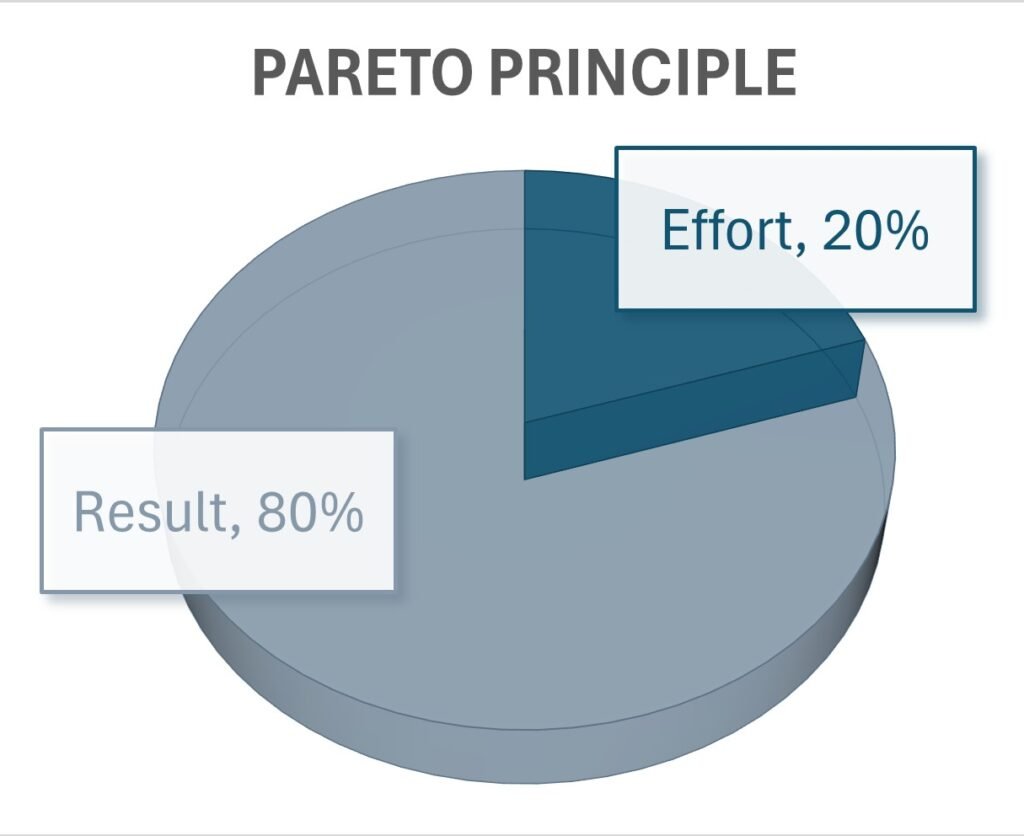
The 80/20 rule, also known as the Pareto Principle, reveals that roughly 80% of your results come from just 20% of your efforts.
For side income builders, this means most of your earnings will come from a small fraction of your activities. Understanding and applying this principle can transform your approach to building sustainable side income.
Understanding the 80/20 Rule for Side Income
The Pareto Principle was discovered by Italian economist Vilfredo Pareto in 1906 when he noticed that 80% of Italy’s wealth was owned by 20% of the population. This pattern appears everywhere in business and life:
- 80% of a company’s profits come from 20% of its customers
- 80% of complaints come from 20% of clients
- 80% of software bugs come from 20% of the code
For side income, this principle means:
- 80% of your income will come from 20% of your income streams
- 80% of your clients will come from 20% of your marketing efforts
- 80% of your results will come from 20% of your activities
The key is identifying which activities, clients, and income streams fall into that powerful 20%.
Identifying Your High-Impact 20% Activities
Before diving into specific strategies, you need to recognize what activities actually generate income versus what just keeps you busy. Many professionals waste time on low-impact tasks that feel productive but don’t move the revenue needle.

High-Impact Activities (Your 20%):
- Creating content that directly leads to sales
- Building relationships with ideal clients
- Developing systems that work without constant attention
- Focusing on one income stream until it’s profitable
- Learning skills that directly increase your earning potential
Low-Impact Activities (The 80% Trap):
- Perfecting your website design for the tenth time
- Following every new marketing trend
- Spending hours on social media without strategy
- Trying to master five different income streams simultaneously
- Attending networking events that don’t match your target audience
Research from the Harvard Business Review shows that high-performing professionals spend 23% more time on activities that directly impact their goals compared to average performers. This time allocation difference compounds over months and years.
The 80/20 Rule in Digital Products
Digital products represent one of the most scalable side income opportunities, but success requires strategic focus. Most creators fail because they spread their efforts too thin across multiple products instead of perfecting one.
The 20% That Drives 80% of Digital Product Success:
Content Quality Over Quantity: One comprehensive, valuable digital product will outperform ten mediocre ones. Focus on solving one specific problem exceptionally well rather than creating multiple products that solve problems halfway.
Targeted Audience Research: Spending time understanding exactly what your audience struggles with most is more valuable than creating products based on assumptions. Survey your audience, read their comments, and identify the problems they’re willing to pay to solve.
Strategic Pricing: Research shows that 80% of digital product revenue often comes from 20% of price points. Instead of competing on low prices, focus on creating premium value that justifies higher prices to a smaller, more committed audience.
Distribution Channel Focus: Rather than trying to sell everywhere, identify the one or two platforms where your ideal customers actually spend money. Amazon Kindle Direct Publishing generates more revenue for many creators than trying to sell across ten different platforms.
Real-World Application: A professional who created a time management course for working parents initially tried selling it for $29 across five platforms. By focusing on one platform, improving the content quality, and raising the price to $97, monthly revenue increased from $340 to $2,100 with fewer total customers but higher satisfaction rates.
The 80/20 Rule in Service-Based Side Income
Service-based side income offers immediate cash flow but can quickly become overwhelming without proper focus. The 80/20 rule helps identify which services and clients generate the most profit with the least stress.
The 20% That Drives 80% of Service Success:
Client Selection: Not all clients are created equal. Research from small business studies shows that top-tier clients typically pay 2-3 times more, provide better feedback, refer other quality clients, and require less hand-holding than average clients.
Service Specialization: Offering one service exceptionally well generates more income than offering five services adequately. Specialists can charge premium rates because they’re seen as experts rather than generalists.
Efficient Systems: Creating templates, processes, and automation for the most common client requests allows you to serve more clients without proportionally increasing your time investment.
High-Value Problem Solving: Focus on services that solve expensive problems or generate significant value for clients. A consultant who saves a business $10,000 annually can charge much more than someone who saves them two hours weekly.
Strategic Examples by Profession:
- Marketing Professionals: Focus on one specific industry (healthcare, real estate, tech) rather than serving everyone
- Designers: Specialize in one type of design (logos, websites, packaging) and become the go-to expert
- Writers: Focus on one content type (email sequences, case studies, product descriptions) for premium rates
- Consultants: Solve one specific problem really well rather than offering general business advice
Case Study Insight: A graphic designer initially offered logo design, business cards, flyers, and website design. By focusing solely on logo design for healthcare practices, she increased her hourly rate from $35 to $125 while working fewer hours due to streamlined processes and specialized expertise.
The 80/20 Rule in Affiliate Income
Affiliate marketing attracts many side income seekers because it requires no product creation, but most affiliates earn very little because they lack focus. The 80/20 principle reveals that successful affiliate marketers concentrate their efforts strategically.
The 20% That Drives 80% of Affiliate Success:
Product Selection Focus: Instead of promoting dozens of products, focus on 2-3 high-quality products that you genuinely use and can recommend authentically. Deep knowledge of fewer products allows for more compelling content and higher conversion rates.
Content Distribution Strategy: Rather than trying to be everywhere online, focus on one primary platform where your audience actively seeks product recommendations. Whether that’s a blog, YouTube channel, or email newsletter, master one channel before expanding.
Audience Trust Building: Research shows that affiliate marketers with engaged, trusting audiences convert at 3-5 times higher rates than those with large but disengaged followings. Focus on building genuine relationships rather than chasing follower counts.
Strategic Content Creation: Create comprehensive, helpful content around the problems your affiliate products solve rather than just writing product reviews. Educational content that positions products as solutions within broader problem-solving contexts performs significantly better.
Profitable Niche Selection: Some affiliate niches simply pay better than others. Business tools, financial services, and educational products typically offer higher commissions and lifetime values compared to consumer goods.
Implementation Example: Instead of promoting 20 different productivity apps across multiple platforms, focus on becoming the expert on 2-3 business productivity tools through in-depth blog content, email sequences, and strategic social media presence on LinkedIn where business professionals seek recommendations.
Practical Implementation Strategy
Understanding the 80/20 rule intellectually is different from applying it practically. Here’s how to implement this principle in your side income journey:
Week 1: Audit Your Current Activities Track how you spend your side income building time for one week. Categorize activities as either “directly income-generating” or “supporting activities.” Most professionals discover they’re spending less than 20% of their time on activities that directly generate money.
Week 2: Identify Your Top Performers If you’re already earning side income, analyze which activities, clients, or income streams generate the most revenue per hour invested. If you’re just starting, research which opportunities in your chosen area have the highest income potential relative to time investment.
Week 3: Eliminate or Minimize Low-Impact Activities This is often the hardest step because many low-impact activities feel important. However, time spent perfecting your logo design doesn’t generate income—time spent creating valuable content or reaching out to potential clients does.
Week 4: Double Down on High-Impact Activities Once you’ve identified your 20%, invest more time and resources into these areas. If one type of content generates more engagement and sales, create more of that content rather than experimenting with new formats.
Common Mistakes When Applying the 80/20 Rule
Mistake 1: Misidentifying the 20% Many people confuse busy work with productive work. Just because an activity takes time doesn’t mean it’s part of your crucial 20%. Always tie activities back to actual income generation or clear progress toward income goals.
Mistake 2: Abandoning Everything Else Too Quickly The 80/20 rule doesn’t mean you should only do 20% of activities. Supporting activities are still necessary—they just shouldn’t consume most of your time and energy.
Mistake 3: Not Giving Strategies Enough Time Don’t apply the 80/20 analysis too quickly. Some income-generating activities take time to show results. Give strategies at least 60-90 days before determining their effectiveness.
Mistake 4: Focusing Only on Money While income is important, also consider which activities you enjoy and can sustain long-term. The most profitable activity that you hate doing won’t be sustainable as a side income strategy.
Measuring and Adjusting Your Approach
Success with the 80/20 rule requires ongoing measurement and adjustment. Set up simple tracking systems to monitor:
- Time invested in different activities
- Revenue generated from each income stream
- Client satisfaction and referral rates
- Content performance and engagement rates
Review this data monthly and adjust your focus accordingly. What works today might not work next year as markets and your skills evolve.
Final Thoughts
The 80/20 rule isn’t a one-time application—it’s an ongoing mindset that helps you continuously focus on what generates the best results.
By consistently identifying and focusing on your highest-impact activities, you can build sustainable side income without burning out or working excessive hours.
Remember, the goal isn’t to work more—it’s to work more effectively. When you focus your efforts on the activities that truly drive results, you’ll be amazed at how much progress you can make with the same amount of time and energy.